Housing Market Update
Awni & Chantell Abbas
REALTORS
Awntel Property Advisors
Equal Housing Opportunity
“AWNTELL IT LIKE IT IS” SHOW
7 STAR SERVICE

Find your perfect neighborhood

See ALL the homes that qualify!

Get an INSTANT home valuation

Check on the local real estate market
Housing Market Update
Awni & Chantell Abbas
REALTORS
Awntel Property Advisors
Equal Housing Opportunity
“AWNTELL IT LIKE IT IS” SHOW
7 STAR SERVICE
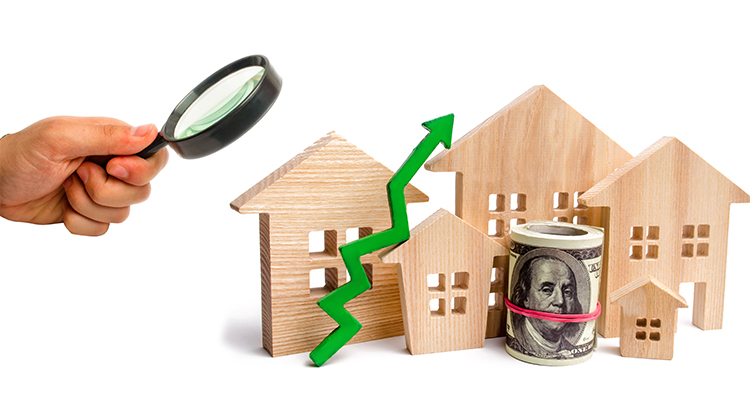
Home values have softened over the last twelve months. We are no longer seeing 6-7% annual appreciation levels for the national housing market. The current numbers are closer to 4%. Some have suggested that year-over-year appreciation levels could fall to 3% or less this year.
However, a stronger-than-expected economy and a good spring housing market have changed some opinions. Some analysts are now predicting that home value appreciation may begin to increase as we move forward.
“Data on the movement of unadjusted house prices during the early spring home-buying season won’t be available for a few more months, but it’s quite likely that price appreciation will accelerate again.”
“Home prices nationwide, including distressed sales, increased year over year by 3.7% in March 2019 compared with March 2018…The CoreLogic HPI Forecast indicates that home prices will increase by 4.8% on a year-over-year basis from March 2019 to March 2020.”
Price appreciation has slowed over the past year. However, a strong economy and a good housing market have many experts thinking that home values might re-accelerate moderately throughout the rest of this year.
Housing Market Update
Awni & Chantell Abbas
REALTORS
Awntel Property Advisors
Equal Housing Opportunity
“AWNTELL IT LIKE IT IS” SHOW
7 STAR SERVICE

So, you’ve been searching for that perfect house to call ‘home,’ and you’ve finally found it! The price is right, and in such a competitive market, you want to make sure you make a good offer so that you can guarantee that your dream of making this house yours comes true!
Below are 4 steps provided by Freddie Mac to help buyers make offers, along with some additional information for your consideration:
“You’ve found the perfect home and you’re ready to buy. Now what? Your real estate agent will be by your side, helping you determine an offer price that is fair.”
Based on your agent’s experience and key considerations (like similar homes recently sold in the same neighborhood or the condition of the house and what you can afford), your agent will help you to determine the offer that you are going to present.
Getting pre-approved will not only show home-sellers that you are serious about buying, but it will also allow you to make your offer with confidence because you’ll know that you have already been approved for a mortgage in that amount.
“Once you’ve determined your price, your agent will draw up an offer, or purchase agreement, to submit to the seller’s real estate agent. This offer will include the purchase price and terms and conditions of the purchase.”
Talk with your agent to find out if there are any ways in which you can make your offer stand out in this competitive market! A licensed real estate agent who is active in the neighborhoods you are considering will be instrumental in helping you put in a solid offer.
“Oftentimes, the seller will counter the offer, typically asking for a higher purchase price or to adjust the closing date. In these cases, the seller’s agent will submit a counteroffer to your agent, detailing their desired changes, at this time, you can either accept the offer or decide if you want to counter.
Each time changes are made through a counteroffer, you or the seller have the option to accept, reject or counter it again. The contract is considered final when both parties sign the written offer.”
If your offer is approved, Freddie Mac urges you to “always get an independent home inspection, so you know the true condition of the home.” If the inspector uncovers undisclosed problems or issues, you can discuss any repairs that may need to be made with the seller or even cancel the contract altogether.
The inventory of homes listed for sale has remained well below the 6-month supply that is needed for a ‘normal’ market. Buyer demand has continued to outpace the supply of homes for sale, causing buyers to compete with each other for their dream homes.
Make sure that as soon as you decide that you want to make an offer, you work with your agent to present it as quickly as possible.
Whether buying your first home or your fifth, having a local real estate professional who is an expert in his or her market on your side is your best bet in making sure the process goes smoothly. Let’s talk about how we can make your dream of homeownership a reality!
Housing Market Update
Awni & Chantell Abbas
REALTORS
Awntel Property Advisors
Equal Housing Opportunity
“AWNTELL IT LIKE IT IS” SHOW
7 STAR SERVICE


Home prices have been on the rise for the last seven years, leading many housing market analysts to conclude that first-time homebuyers are being shut out of the market due to affordability concerns.
The National Association of Realtors (NAR) reports on the percentage of First-Time Home Buyers (FTHB) on a monthly and yearly basis. Their latest report shows that FTHB’s made up 33% of buyers in March, which matches their reported share in 2018.
NAR uses survey data from their members to come up with this statistic, so their results do not include every transaction completed. Rather, they only the transactions reported by members who complete the survey.
The other entity that reports on FTHB share is the American Enterprise Institute (AEI). The AEI uses data from mortgage applications that define an FTHB as “any borrower who did not have a mortgage for the preceding three years.”
This means the AEI measurement also includes former homeowners who transitioned out of a home they previously owned and re-entered the market after at least 3 years. The latest FTHB share data from AEI shows that first-time buyers made up 57.5% of all mortgages in August 2018. NAR’s data shows a 31% share for the same time period.
New research from the New York Federal Reserve shows that these traditional reports on FTHB share have been unable to give an accurate depiction of this group’s involvement in the market.
The NY Fed was able to take consumer credit data and identify when a mortgage payment entered a consumer’s credit report to determine when a first-time home purchase was made. Using this data, they were able to show that AEI’s reported FTHB share was consistently 10% higher. The NAR reports were right on par with their findings until 2010, when NAR’s share dropped to the 11% gap seen today.
First-time home buyers have not disappeared from the market as many analysts had believed. Buying a home is very much a part of the American Dream for younger generations, just like it had been for their parents and grandparents.
This also means that rising prices have not scared buyers away from the market. Many first-time buyers are making sacrifices to save their down payment and make their dream a reality.
If you are one of the many renters who is scrolling through listings on your phone every night dreaming of buying your own home, there are opportunities in every market to make that dream a reality!
Housing Market Update
Awni & Chantell Abbas
REALTORS
Awntel Property Advisors
Equal Housing Opportunity
“AWNTELL IT LIKE IT IS” SHOW
7 STAR SERVICE


The housing crisis is finally in the rear-view mirror as the real estate market moves down the road to a complete recovery. Home values are up and distressed sales (foreclosures and short sales) have fallen to their lowest point in years. The market will continue to strengthen in 2019.
However, there is one thing that may cause the industry to tap the brakes: a lack of housing inventory! Buyer demand naturally increases during the summer months, but supply has not kept up.
Lawrence Yun, Chief Economist at National Association of Realtors
“Further increases in inventory are highly desirable to keep home prices in check, the sustained steady gains in home sales can occur when home price appreciation grows at roughly the same pace as wage growth.”
Jessica Lautz, Vice President of NAR
“There’s a supply-demand mismatch… More inventory is needed at the lower end and a price reduction may be needed at the upper end.”
Danielle Hale, Chief Economist of Realtor.com
“Heading into spring, U.S. prices are expected to continue to rise and inventory is expected to continue to increase, but at a slower pace than we’ve seen the last few months as fewer sellers want to contend with this year’s more challenging conditions… A buyer’s experience will vary notably depending on the market and price point they’re targeting.”
If you are thinking of selling, now may be the time! Demand for your house will be strong at a time when there is very little competition. That could lead to a quick sale for a really good price!
![A Tale of Two Markets [INFOGRAPHIC] | MyKCM](https://files.mykcm.com/2019/05/29110946/20190510-ENG-STM-1046x1354.jpg)

If you are in the market to buy a home this year, you may be confused about how much money you need to come up with for your down payment. Many people you talk to will tell you that you need to save 20% or you won’t be able to secure a mortgage.
The truth is that there are many programs available that let you put down as little as 3%. Those who have served our country could qualify for a Veterans Affairs Home Loan (VA) without needing a down payment.
These programs have cut the savings time that many families would need to compile a large down payment from five or more years down to a year or two. This allows them to start building family wealth sooner.
So then, why do so many people believe that they need a 20% down payment to buy a home? There has to be a reason! Today, we want to talk about four reasons why putting 20% down is a good plan, if you can afford it.
Putting down a 20% down payment vs. a 3-5% down payment shows your lender/bank that you are more financially stable, thus a good credit risk. The more confident your bank is in your credit score and your ability to pay your loan, the lower the rate they will be willing to give you.
The bigger your down payment, the lower your loan amount will be for your mortgage. If you are able to pay 20% of the cost of your new home at the start of the transaction, you will only pay interest on the remaining 80%. If you put down a 5% down payment, the extra 15% on your loan will accrue interest and end up costing you more in the long run!
In a market where many buyers are competing for the same home, sellers like to see offers come in with 20% or larger down payments. The seller gains the same confidence that the bank did above. You are seen as a stronger buyer whose financing is more likely to be approved. Therefore, the deal will be more likely to go through!
Simply put, PMI is “an insurance policy that protects the lender if you are unable to pay your mortgage. It’s a monthly fee, rolled into your mortgage payment, that is required for all conforming, conventional loans that have down payments less than 20%.”
As we mentioned earlier, when you put down less than 20% to buy a home, your lender/bank will see your loan as having more risk. PMI helps them recover their investment in you if you are unable to pay your loan. This insurance is not required if you are able to put down 20% or more.
Many times, home sellers looking to move up to a larger or more expensive home are able to take the equity they earn from the sale of their house to put down 20% on their next home.
If you are looking to buy your first home, you will have to weigh the benefits of saving a 20% down payment vs. the time and cost of continuing to rent while you save that amount.
If your plan for your future includes buying a home and you’re already saving for your down payment, let’s get together to help you decide what down payment size best fits with your long-term plan!